THERMO PLASTIC ROAD MARKING
Professional Thermoplastic Road Marking & Zebra Crossing Services
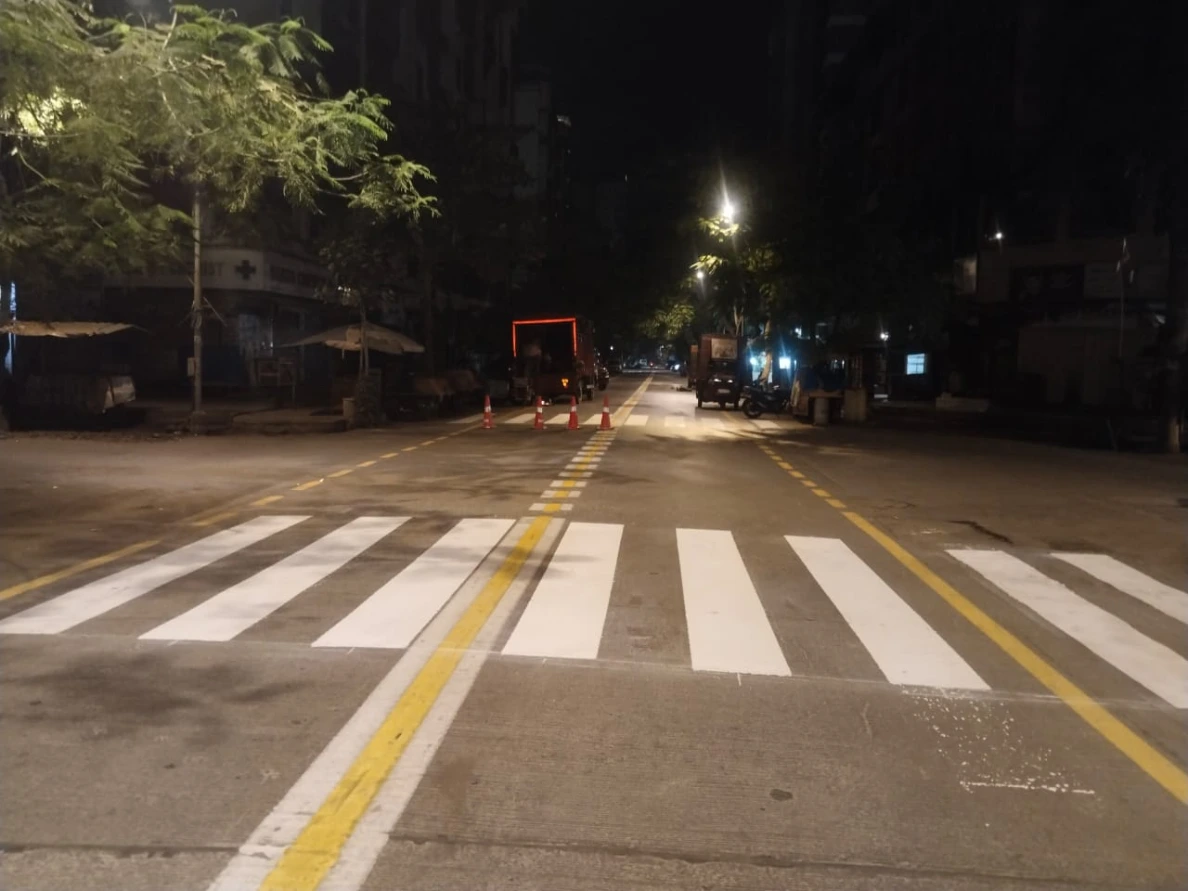
We specialize in providing high-quality Thermoplastic Road Marking and Zebra Crossing Services for highways, urban roads, municipal roads, industrial areas, townships, parking facilities, institutions, airports, warehouses, commercial complexes, and public infrastructure projects. Our services are focused on enhancing road safety, improving traffic management, and delivering long-lasting road markings that meet professional standards.
Using advanced thermoplastic road marking technology, premium-grade materials, and modern application equipment, we create highly visible and durable road markings designed to withstand heavy traffic, harsh weather conditions, and daily wear and tear. Our experienced team is committed to delivering precision, quality, and reliability on every project, regardless of size or complexity.
What is Thermoplastic Road Marking?
Thermoplastic road marking is a high-performance traffic marking system widely used across modern transportation networks. It is manufactured from a carefully engineered blend of synthetic resins, pigments, fillers, glass beads, and performance-enhancing additives. The material is heated to approximately 180°C–200°C until molten and then applied to the road surface using specialized thermoplastic application equipment.
Once applied, the material rapidly cools and forms a thick, highly durable, and reflective marking layer that provides superior performance compared to conventional road paints.
Our Thermoplastic Road Marking Services Include
- Center Line Markings
- Lane Line Markings
- Edge Line Markings
- Stop Lines
- Directional Arrows
- Speed Breaker Markings
- Hazard and Warning Markings
- Parking Bay Markings
- Industrial Safety Markings
- Warehouse Floor Markings
- School Zone Markings
- Bus Stop Markings
- Bicycle Lane Markings
- Pedestrian Guidance Markings
- Zebra Crossings
- Reflective Road Safety Markings
- Custom Traffic Symbols and Signage
Professional Zebra Crossing Installation
Zebra crossings are among the most critical road safety features for protecting pedestrians. We install highly visible thermoplastic zebra crossings that remain bright, durable, and skid-resistant even under continuous vehicle movement.
Our zebra crossing solutions are ideal for:
- Schools and Educational Institutions
- Hospitals and Healthcare Facilities
- Municipal Roads
- National and State Highways
- Commercial Areas
- Residential Townships
- Toll Plazas
- Government Infrastructure Projects
- Industrial Facilities
The use of reflective glass beads ensures excellent visibility during nighttime and adverse weather conditions, helping drivers identify pedestrian crossings from a greater distance.
Advanced Application Process
To ensure maximum durability and performance, every project follows a professional application process:
Surface Preparation
- Complete cleaning of dust, dirt, grease, and loose particles
- Surface inspection and preparation
- Proper layout and measurement according to project specifications
Primer Application
- High-quality primer application on bituminous or concrete surfaces
- Enhanced bonding strength and longer service life
Thermoplastic Application
- Material heated to recommended temperatures
- Uniform application using advanced screed and extrusion equipment
- Consistent thickness for maximum durability
Glass Bead Application
- Premium reflective glass beads applied immediately after marking
- Enhanced night visibility and retro-reflective performance
Quality Inspection
- Thickness verification
- Reflectivity checks
- Dimensional accuracy inspection
- Final project quality assurance
Benefits of Thermoplastic Road Marking
✔ Superior Durability
✔ Long Service Life Compared to Conventional Paint
✔ High Daytime and Nighttime Visibility
✔ Excellent Retro-Reflectivity
✔ Fast Drying and Quick Traffic Opening
✔ Strong Adhesion to Road Surfaces
✔ Resistance to Weather and UV Exposure
✔ Skid-Resistant Surface
✔ Reduced Maintenance Requirements
✔ Cost-Effective Long-Term Solution
✔ Improved Road Safety
✔ Better Traffic Guidance and Control
✔ Enhanced Pedestrian Safety
✔ Suitable for Heavy Traffic Conditions
Modern Equipment & Technology
Our team utilizes advanced road marking equipment and modern application techniques to ensure precision and efficiency on every project.
Our equipment includes:
- Thermoplastic Preheater Machines
- Hydraulic Thermoplastic Applicator Machines
- Screed Box Applicators
- Glass Bead Dispensers
- Road Surface Preparation Equipment
- Layout and Measuring Instruments
- Safety and Traffic Management Equipment
By using modern machinery and proven installation methods, we deliver consistent quality, accurate dimensions, and professional finishing across all projects.
Safety First Approach
Safety remains a priority throughout every stage of our operations.
We follow strict safety procedures including:
- Work Zone Traffic Management
- Proper Barricading and Signage
- Personal Protective Equipment (PPE)
- Heat Handling Safety Protocols
- Quality Control and Inspection Procedures
- Compliance with Road Safety Standards
Our trained workforce ensures that all projects are executed safely, efficiently, and with minimal disruption to traffic flow.
Experienced & Reliable Team
Our strength lies in our skilled and dedicated workforce. Every project is managed by experienced professionals who understand the technical requirements of road marking applications.
Why clients choose us:
✔ Experienced Road Marking Specialists
✔ Reliable and Professional Service
✔ Timely Project Completion
✔ Precision Workmanship
✔ Consistent Quality Standards
✔ Strong Project Management
✔ Customer-Focused Approach
✔ Transparent Pricing
✔ Dependable After-Service Support
Competitive Pricing
We believe that professional road safety solutions should be both high-quality and cost-effective.
Our thermoplastic road marking services are available at competitive rates ranging from approximately:
₹310 – ₹350 per Square Meter*
*Rates may vary depending on project size, site conditions, material specifications, marking thickness, location, and prevailing market rates.
We provide fair and transparent quotations while maintaining the highest standards of workmanship, materials, and safety.
Our Commitment
Our mission is to provide durable, high-visibility, and professionally executed thermoplastic road marking solutions that contribute to safer roads and better traffic management. Through the use of premium materials, advanced equipment, skilled manpower, and strict quality control, we deliver results that clients can trust for years to come.
Reliable Service • Professional Execution • Advanced Equipment • Competitive Pricing • Safer Roads